
Two threads braided together during Shon’s cancer journey: fierce acceptance—facing what is, exactly as it is—and a series of workshops where climate grief, art, and community voice found each other in the forest. Both ask the same question: what becomes possible when we stop turning away?
(If you’re new to Eclosion: An Artist’s Path to Power and Peace, start at the beginning. Or visit my Memoir Hub for a full table of contents with links.)
What is
It was through acceptance of my current situation, my current reality, that I was able to move into a space of joy and excitement. For those first months, I tried so hard to process Shon’s diagnosis and what it meant for our family. At the same time, I was pushing against it, aching for it to not be happening at all.
Through every challenge I face, I learn again and again—sometimes with an iota of grace, often kicking and screaming—that acceptance is integral for healing and transformation. I couldn’t possibly move into a new way of relating to Shon’s cancer journey without accepting the reality of what was. The how of acceptance is something of a mystery. For me, it was so many little pieces. It was yoga and meditation. It was jogging and walking in nature. It was painting in my studio and singing songs. It was cuddling and laughing with Seren. It was setting boundaries and sharing my fears, my need for support, and learning to receive what was so freely given. It is this practice of acceptance that allows me to show up fully for this life.
To create a future where we all thrive, I must first accept the world as it is. That means facing the stark realities of climate change, species loss, and inequities in race, gender, and wealth—even if some days, I’d rather pretend they don’t exist. I must accept the realities of our society—both our strengths and our fragility. Only by accepting these truths, instead of turning away, can I begin to heal and rebuild. This is not easy; it requires sitting through a lot of uncomfortable feelings: grief, anger, regret.
This acceptance is not about giving up or saying the world’s atrocities are acceptable—they are not. Instead, it’s about facing the truth of what is, without pretending otherwise. Because what really is, like the pristine reflection of the Salish Sea on a calm day, is almost always much more complicated and nuanced than what is revealed on its surface.
With my newfound acceptance, I continued to face the hard things and take action towards changing them. I simply decided to let go of what I couldn’t change and focus on what was in front of me—showing up for my husband, being present with my child, letting our community hold us, and turning the meaningful work I was doing—AKA my calling—into a successful business that could create positive change and support my family, no matter the outcome of Shon’s cancer journey.
When I accept reality, I am able to discern what is within my power to change, and what is not. I couldn’t change the fact that Shon had cancer. I could change how I responded to it.
Forest of Grief, Seeds of Hope
“As I gave power to the sound of my own voice
A way broke before me I followed my choice.”
~I Be Your Water by Sweet Honey in the Rock
Even as I was finding acceptance in Shon’s cancer journey, I found myself showing up with and for my community in new ways. That fall, I took my Climate Art in Action work offline, away from buildings, and into nature for a series of Visioning and Art in the Forest workshops. There, immersed in the forest of Squaxin Park—with roots stretching deep into the earth beneath and trees towering above—we deepened our commitments to creative climate action and decolonization.
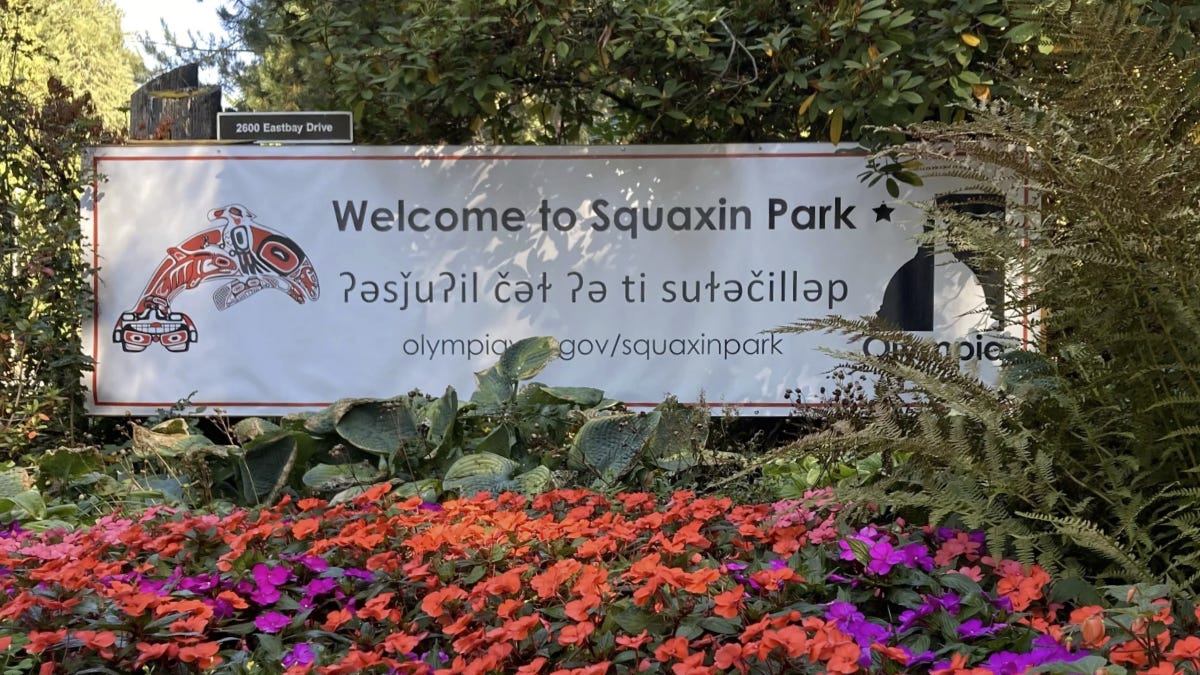
From the founding of the park by the City of Olympia in 1905 until 2022, Squaxin Park was named Priest Point Park. For many of us in the workshop, this was our first gathering in the park since the renaming. Simply entering the park and seeing the sign announcing Squaxin Park, with both the City and Squaxin Island Tribe’s logos, was healing.
Candace Penn, Tribal Member and Climate Change Ecologist of the Squaxin Island Tribe, opened the workshop with a tribal blessing and song. Writer Kathleen Byrd shared a poem she’d written several years earlier about how Priest Point Park was misnamed. Then, Candace shared her personal experience and the profound significance of the recent Un-naming and Re-naming of this incredible park, to Squaxin Park. It was an honor to hear her words. Her vulnerability was an invitation, moving others to share their own art, grief, and anger.
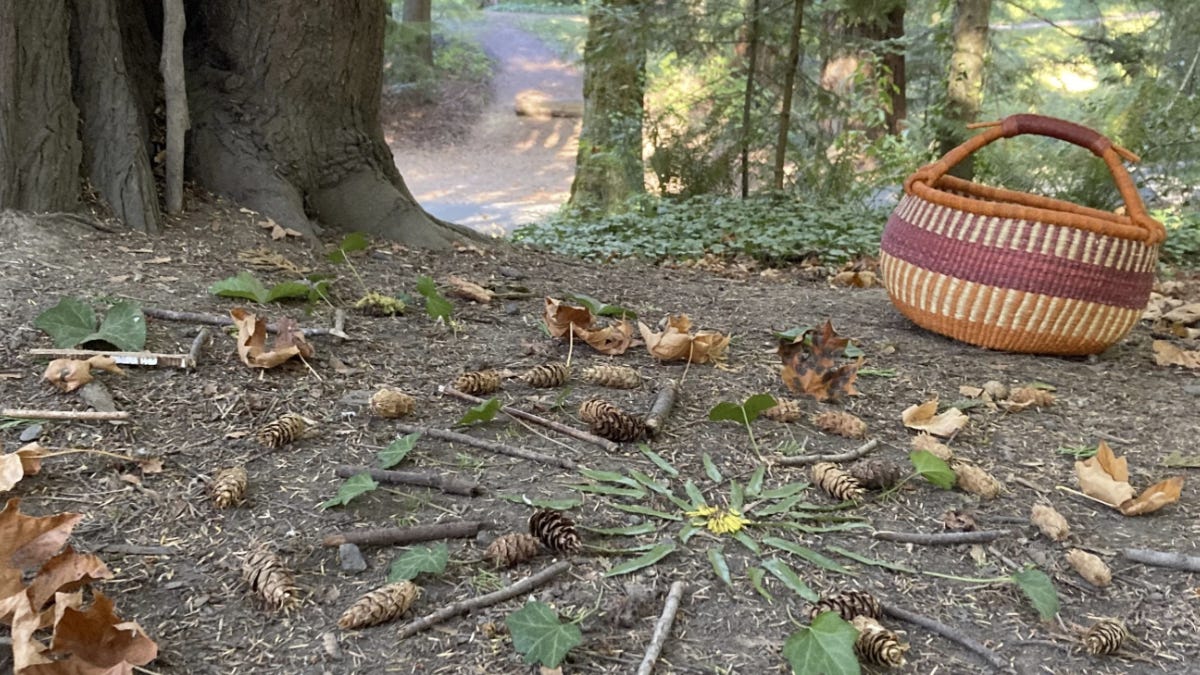
The tabletops were covered in paper, paint markers, and natural materials from the forest. We used these materials to make a collaborative art piece under a nearby tree and to create art on the tabletops. People returned to the artful collaboration throughout the workshop, adding and expanding this collective work.
Candace shared insights on climate grief, helping us to acknowledge and normalize its presence and offering ways to recognize it in ourselves and others. She suggested taking time in nature as one way of coping with this grief. If you are unable to be in nature, bringing something from nature inside—dried leaves, shells, or pebbles—may help you to ground.
After delving further into climate grief, and what helps move people through grief and into action, Kathleen led us in a writing exercise exploring “What Is and What If.” Participants shared parts of their writing with the group, amazing me in how our grief seemed to transform into hope and a greater commitment to action through this writing. My words flowed onto the paper, and when I shared them with the group, they poured out with force.
What is and What if…
What is and what if.
What is and what if.
What is: I am surrounded by hopeful, creative people.
What if each one of these people said Yes to the sometimes quiet, sometimes loud, persistent voice in our heads. What if each of us said a loud, deep, primal YES! to walk through our fears and into the fullest expression of who we are.
What if there was, or maybe already is, support for this. What if the Universe, represented by those we come across in our day to day lives, was waiting, arms open to hold us, to support us in ways we can’t even imagine?
What if when we say Yes, it results in another being able to say yes.
What if this is already What Is.
Then I say Yes. Yes! YES! That my Yes will make yours that much easier to say.
After sharing this writing, we all said a great, big resounding YES, our voices reverberating through the forest.
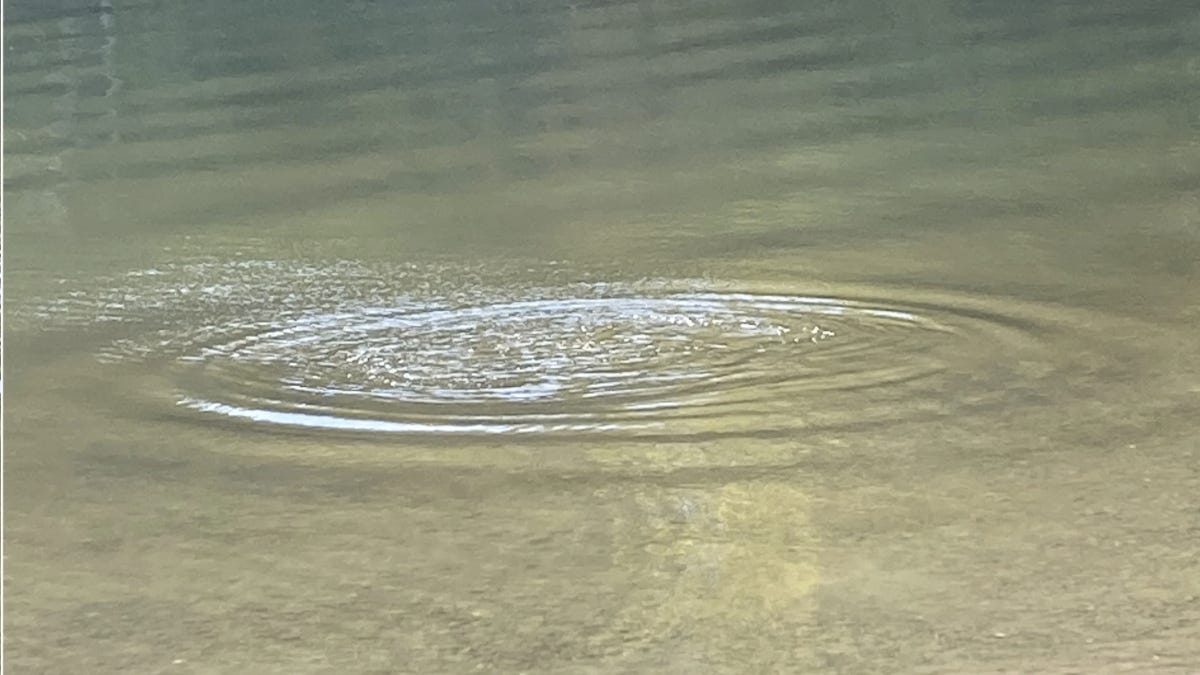
We ended the workshop by walking to the Salish Sea together, finding a pebble, and resting our thoughts and commitments to artful action within our pebble. Tossing these intentions into the sea, we watched the ripples move ever outward, choosing to believe that our actions have the power to create ripples of change in ways that we may never know or understand.
As the ground is healed
So too the people are healed
As the people heal
So too the ground heals
Sitting alone in the forest after the workshop, I felt connected, motivated, held, and activated. A thought came, unbidden: I am finding my Voice. In the next moment, self-doubt tried to rise up. If I find my voice, I will have to use it! I’d been using my voice for quite some time, but there are always new layers to these things. New growth, new depths.
I reread my writing from the workshop, recalling the power of our combined voices. Two things felt very true.
Our voices together have Power.
My voice is the only one I have the power to change.
What is true in your life right now that you've been avoiding looking at directly—and what might open if you did?