
We enter Migration—the phase where transformation moves outward into the world. This chapter begins on a Mediterranean beach, building sandcastles with Seren as Shon finally exhales into remission. It ends in a classroom, where thirty students who'd lived through a pandemic answered the question: is it too late to hope?
(If you’re new to Eclosion: An Artist’s Path to Power and Peace, start at the beginning. Or visit my Memoir Hub for a full table of contents with links.)
Hope as Action
“Choices and voices are the power that we all wield. We can use our power for good in the world; for our bodies, for water, and for future generations. Empower ourselves and each other to make powerful choices in our lives and communities that ripple outwards towards Center.”
~ Jennifer Johnson, from The Butterfly Effect
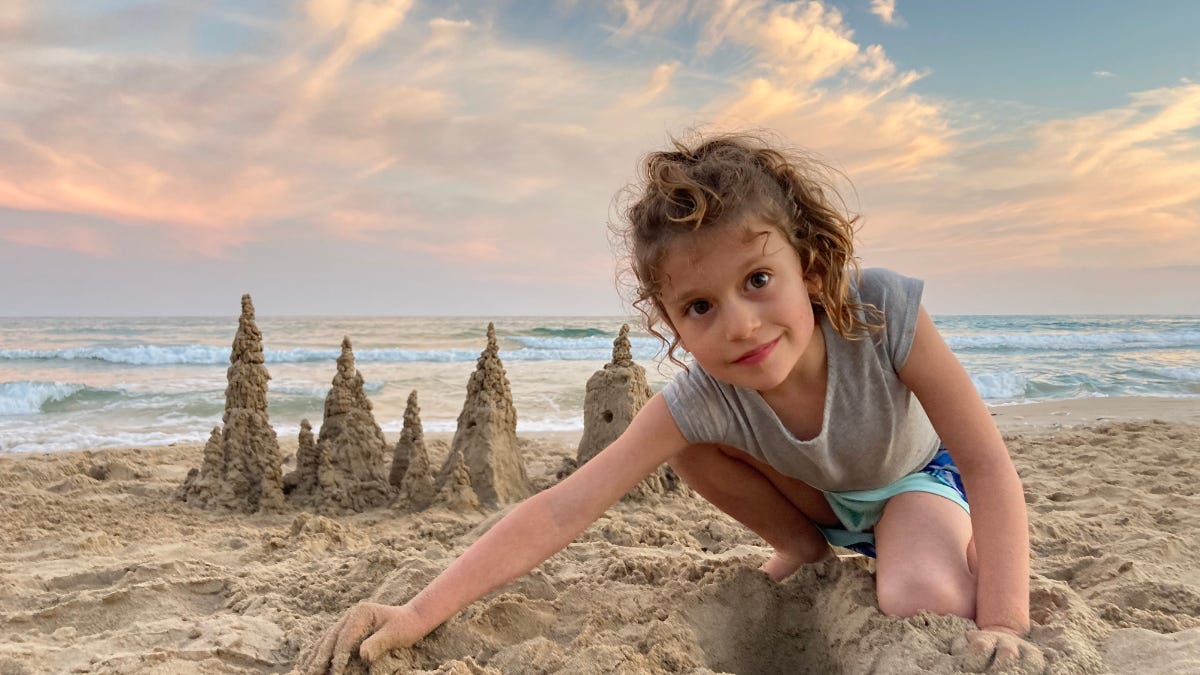
The wet sand slipped through my fingers, adding to the sandcastle we were building, handful by handful, the spires growing taller and spindlier. I caught Seren’s eye as we raced the incoming tide—frantically digging a moat around our castle to divert the waves, laughing as the sand is pulled out from beneath a spire and it collapses back into the sea.
We were on the coast of Spain, reveling in the slight breeze from the Mediterranean Sea. Shon had planned to go to Barcelona for a conference the year prior, but the cancer stopped that. Now in remission, he finally felt he could live again.
This trip was our celebration—a much needed break for each of us. It allowed space to process Shon’s cancer journey, to rest and relax, to connect with each other, ourselves, and our beautiful planet. It was my first trip to Europe, and I didn’t know what to expect. I imagined that all the wild spaces would be developed, built up by humans, except for a few natural remnants. To my surprise and joy, this was far from reality. A week into our adventure, standing on a Mediterranean beach, bordered by red rock cliffs, I found myself completely enchanted with Spain.
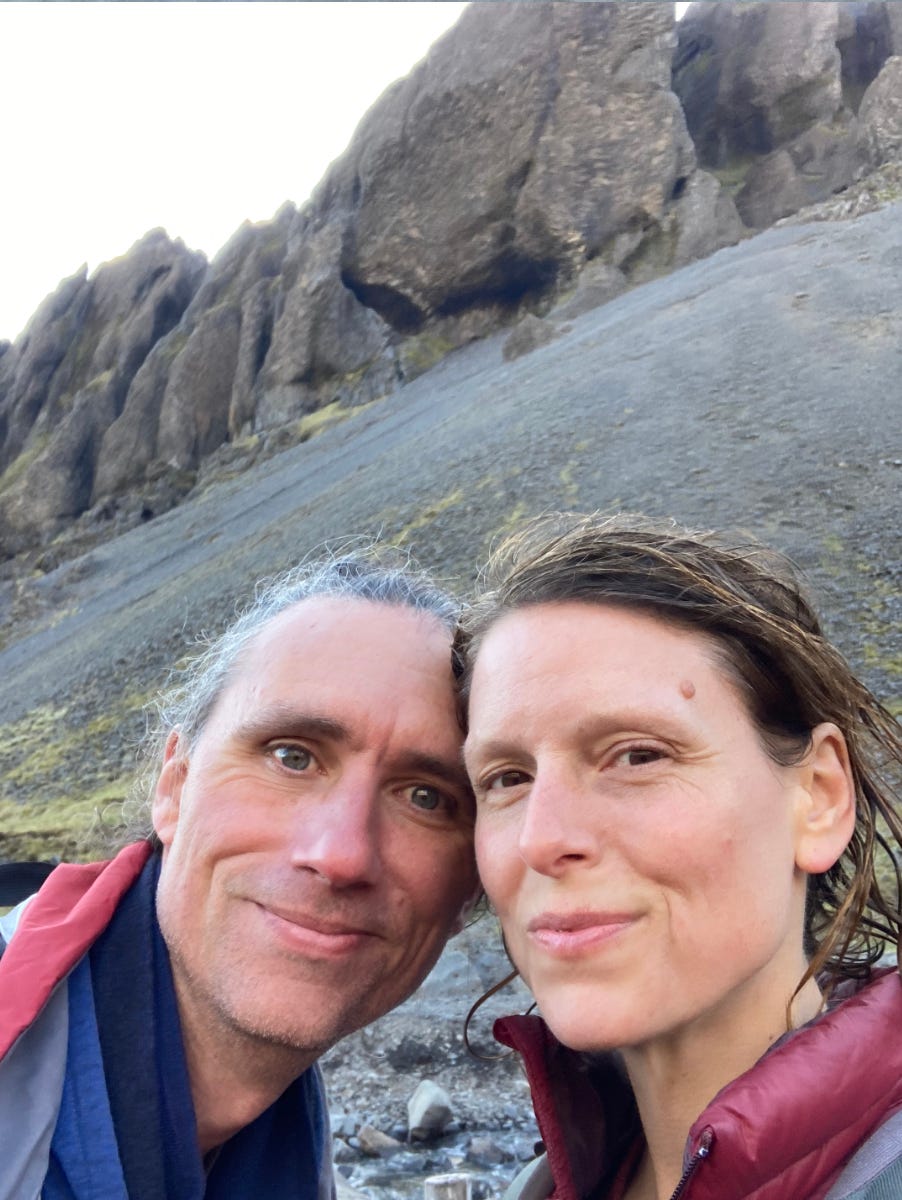
There are so many highlights of this trip: eating gluten-free baguettes with local cheese and olive oil at the beach, chasing pigeons with Seren, building sandcastles and playing in the waves, seeing old-growth olive trees, exploring 2,000-year-old ruins and tiny mountain villages. Then, leaving Spain to soak in hot springs in the mountains of Iceland and ride Icelandic horses. There is nothing like international travel to bring me back to the present moment. While on this break from work and the problems of the world my body’s aches and pains receded—several years’ worth of stress slowly sifting away with the crashing of the waves.
As I returned from this time of beauty and connection, I carried with me not just memories, but a renewed sense of purpose. It was with this mindset that I met Quasar and Cecily, two incredible teachers at our local alternative high school. We were planning to work together with their students over the following four weeks on a collaborative Art in Action project. The title of their class—From Climate Crisis to Action: Is it too late to Hope? —was a big title for a big problem. On my way to this meeting, I could feel stress circling, wanting to land within. I brought in a mantra that a mentor gave me a while back: “Time is my friend. Time is my friend.” Allowing ease to be my guide.
I entered Quasar and Cecily’s classroom, hugged them both, and spent the next few minutes catching up. After hearing a bit about my trip, Cecily said, “I suppose you’ll have to pick up all the balls you set down during your trip and start juggling them again.”
“Oh no,” I replied, “I’m not juggling balls, I’m juggling balloons. They just slowly float down and if I drop a balloon, it doesn’t break. Then I can pick it up again at my convenience.”
They both loved this visual, exploring the metaphor further. Quasar, a mother of two young children, said she’d been imagining juggling glass balls, or maybe fragile dishware, and that my balloon analogy felt so much gentler and more attainable, adding to the analogy that sometimes the wind might blow a balloon away and that would be okay too.
In fact, a couple of my metaphorical balloons had blown away during the previous week. When a balloon drifts away, it’s up to me to Trust the wind to carry it where it needs to go—and to bring back something even more aligned with my purpose. While I mourned the work that fell through, as an Artist, rejection is the norm—if I let the rejection define me, or my work, I would never get anywhere.
Quasar and Cecily shared what they’d focused on with their students over the previous few weeks, and we began exploring concepts for our collaborative art project. As we tossed ideas back and forth, an image formed in my mind. In one hand, I was holding a terrible weight of suffering. In the other, I shared the breathtaking view of the red rock coast of Spain with Shon and Seren. I held each vision lightly as I could—the sorrow and the joy, the destruction and the love. As I shared this imagining, shivers coursed through my body. I’ve come to know this as a sign to pay attention—that something magical is in the works. As we explored the concept that was tingling through me, we contemplated the duality of this life we live, and the overarching question of the class itself: Is it too late to hope?
Life is filled with hard realities and sometimes terrible things happen. At the same time, our planet is incredibly, mind-bogglingly beautiful and nurturing. How do we hold these two truths simultaneously? Tears came to my eyes as I thought of the beauty that I’d experienced with my family over the past three weeks: bare feet in the sand on the Spanish coast, wild rosemary growing in the mountains, and 1,200-year-old olive trees in Spain. Waterfall after waterfall after waterfall in Iceland. Then returning home to find everything green and fresh with life, birds singing, and the sun shining. This world is filled with so much beauty that I overflow with emotion.
On my first day with the students, we got to know each other a bit, and I shared some of my previous work with them. I talked about what hope means to me: “For me,” I said, “hope is a choice, a choice based in action. Hope is powerful. It is what inspires us to take action. Sustained hope requires action—if we stop at hope, not only is whatever we are hoping for unlikely to manifest, there is nothing to keep our hope alive. The two are inextricably linked.”
Then I asked those thirty high school students the big question: What does it mean to hope? Thirty students who spent their middle school years living through a global pandemic. Thirty students who might or might not believe they even have a future. I had no idea what they would say, or if they would even give an answer.
They did. Every single student shared their idea about what it means to hope.
“Hope is a choice,” one student shared. “The alternative is to give up, lie down, and die.”
Another shared: “We’re living in a constant state of anxiety because of the climate crisis, so feeling anxiety is almost normal for us. But it doesn’t mean we shouldn’t hope”
“Is it too late to hope?” I asked the room at large.
“No, it’s not too late,” one student said firmly. Others nodded, murmuring agreement.
These young people are showing us how to do this work—how to show up even when it’s hard, and to engage with one another in the midst of the terrible beauty of our reality. It was this delicate balance of beauty and sorrow that we explored together. Over the next week I led them through a collaborative design process, discussing our project goals, guiding them to express their own understanding through art, considering who our audience was. What kind of impact were we trying to achieve?
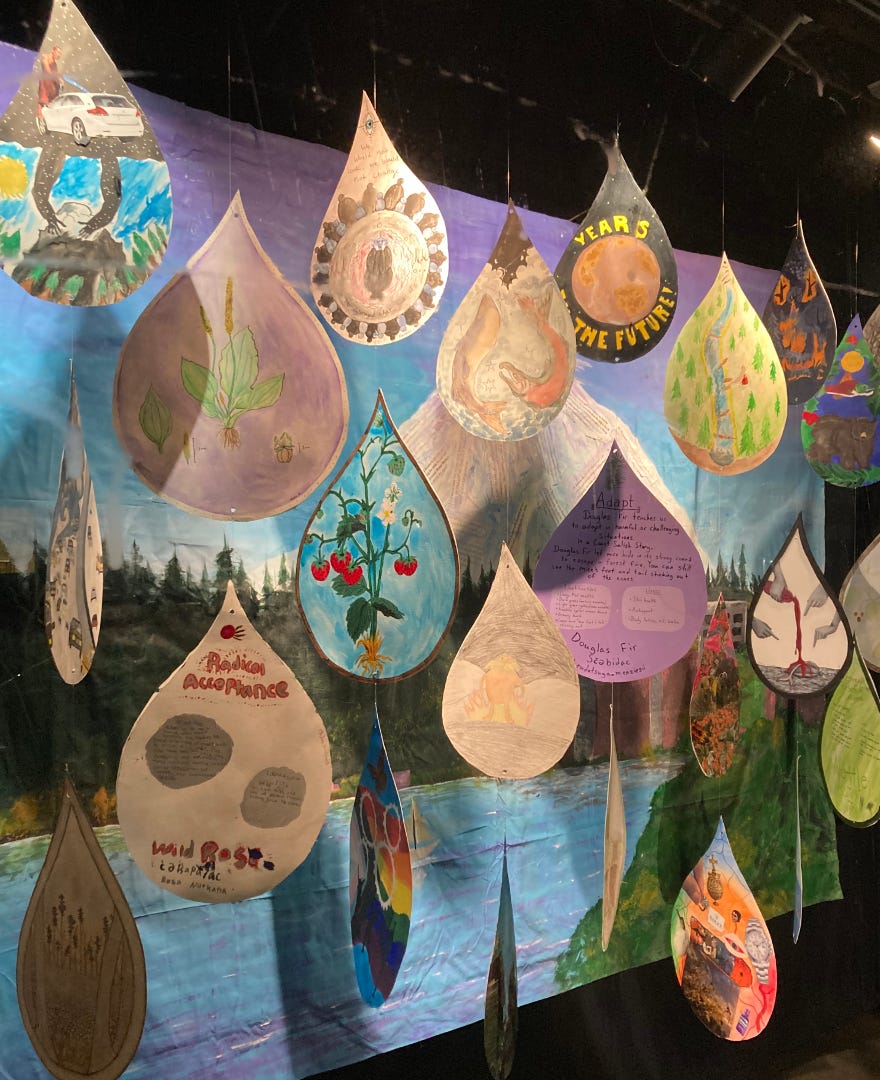
Our design ultimately included a fabric mural of Olympia, WA, with Mount Tahoma, a.k.a. Mount Rainier, in the background. Students pasted words of gratitude—inspired by the Haudenosaunee Thanksgiving Address, made popular by Robin Wall Kimmerer in her eloquent book Braiding Sweetgrass—into the mountain itself.
While some students designed and painted the mural, others painted large, double-sided, paper water drops—many hands creating in tandem. Suspended in front of the mural, the double-sided drops encapsulate a paradox of our existence. On one side, each drop illustrates a regenerative economy brimming with potential; the flip side reveals the stark contrast of an extractive economy that diminishes. It is a balance of sorrow and beauty, where one side may depict the throes of despair and destruction, and the other side is always reaching out towards active hope.
To accompany our installation, the students crafted an artist statement that captured the heart of our message. Part of it reads as follows.…
“The climate crisis is causing immense damage to our environment and ourselves. The snowpack on Mt. Tahoma is decreasing, we have to wear masks because of smoke from wildfires, and our city’s downtown is flooding. Despite this crisis, we choose to hold on to hope. Our title, “Tears of Tahoma,” was inspired by the devastating effects that pollution has on our environment. Even though the name might have a scary meaning the raindrops have two sides to show the duality of a regenerative vs an extractive economy and how we choose to make that shift. We choose to have a reciprocal relationship with our plant teachers and environment. By making these very deep and personal internal shifts, we change the world. We challenge you to find one way that YOU can make the shift. From extractive to regenerative. From a model of scarcity to one of abundance. From despair to hope. From crisis to action…”
Once again, young people are leading the way, showing what it means to hope, to act, to stand up in the face of adversity and despair.
Ours is a realm of stark contrasts. Contemplating the senseless casualties of war, the heartbreak of a species lost, or the tragedy of baby birds perishing in their nests due to record breaking heat, can weigh heavily on my spirit. Yet there’s a moment of transition, a stepping beyond into the awe-inspiring splendor of the world around me. I find it in the laughter shared with my child, the comforting embrace of my partner, the sheer rightness of the natural world.
It is in embracing these conflicting realities—the harrowing and the sublime—that I find clarity in my purpose, in my individual impact. Engaging in just one intentional act creates momentum. By embracing hope, voicing my truth, daring to step beyond the familiar shores of comfort with as much honesty and compassion as I can, even as I stumble and make mistakes, I navigate through life’s complexities with a renewed sense of purpose and sometimes, even ease. And no matter the challenges, I remind myself of this: Fighting for beauty is the most hopeful thing I can do.
Where in your own life is hope asking you to take action—not someday, but now?